
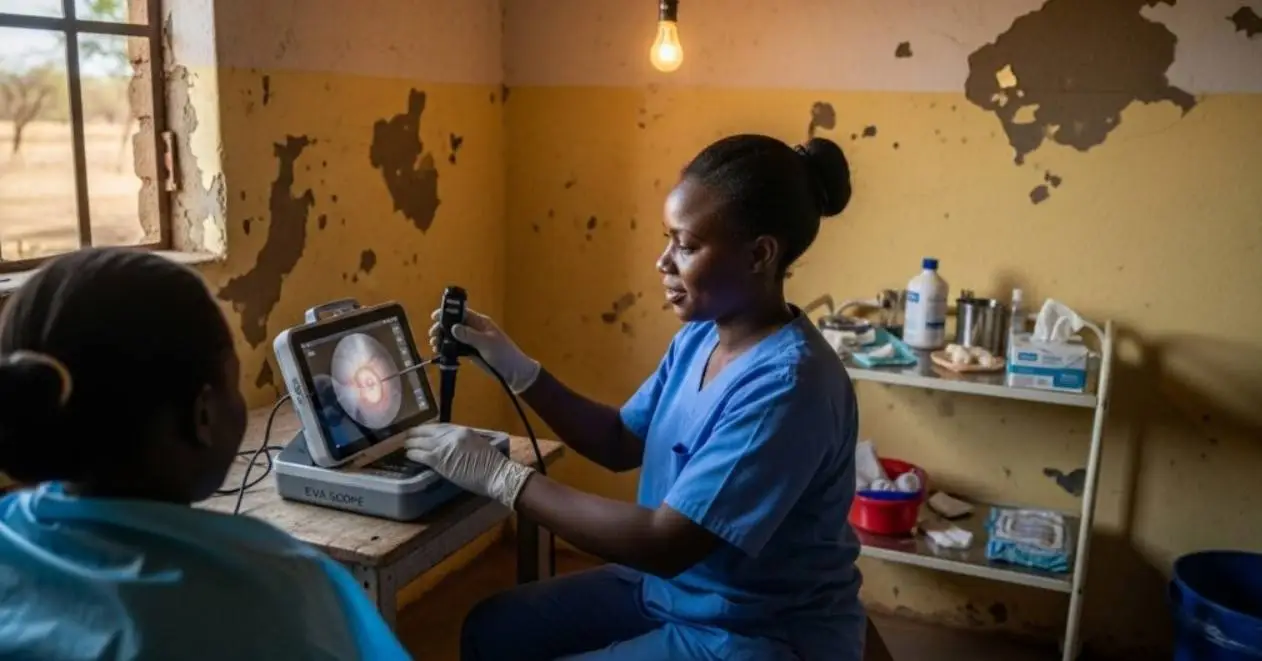
Cholera remains one of the clearest markers of unfinished development in the Global South: a disease medical science solved more than a century ago, yet one that still follows the geography of poverty, conflict, and weak water and sanitation infrastructure. In 2024 alone, the World Health Organization recorded more than 560,000 cholera cases and roughly 6,000 deaths worldwide, with children under five accounting for one in five cases and the African region bearing the majority of deaths. Ethiopia is currently categorised by the WHO African Region as being in acute cholera crisis, and in rural and pastoral communities, long distances to laboratory-capable health facilities can turn a two-to-five-day diagnostic wait into a serious barrier to timely outbreak response.
CAISD is supporting the development and clinical validation of the Vibrio AI Cholera Diagnostic Suite, an edge-AI diagnostic tool that runs locally on standard mobile devices, works with low-cost 3D-printed smart microscopes, delivers results in about 60 seconds instead of days, and feeds GPS-tagged results into outbreak mapping for public health authorities. The tool is currently a functional prototype in the pilot phase, tested against high-accuracy reference datasets but not yet independently validated in the field. CAISD’s role is to provide the governance, ethics, partnership-building, and implementation capacity needed to move it safely and credibly from prototype to clinically tested, deployment-ready solution.
CAISD is seeking funding for the next stage: independent clinical validation trials in East Africa, field-testing of the low-cost hardware in pilot districts, training for frontline health workers, and data governance safeguards for the surveillance data the system generates. If validation confirms the tool’s field performance, it has the potential to compress cholera diagnosis from days to seconds in the communities where speed can save lives, helping close a diagnostic infrastructure gap that decades of conventional laboratory investment have not closed on their own. We invite funding partners and institutional donors to join us in taking this tool from promise to proof. Donate now and help detect cholera before it spreads.